
Home » Engine Codes P0011 and P0021 How to Diagnose and Repair
Engine Codes P0011 & P0021 – How to Diagnose and Repair
- Andrew Marks
- Car Wisperer
What Engine Codes P0011 and P0021 Mean for Your Car
When your check engine light comes on, and your OBD2 scanner reads engine codes P0011 & P0021, the issue usually involves the variable valve timing (VVT) system. These are camshaft timing engine codes. They mean the camshaft timing on one or both cylinder banks is over-advanced.
- P0011: “A” Camshaft Position Timing, Over-Advanced (Bank 1)
- P0021: “A” Camshaft Position Timing, Over-Advanced (Bank 2)
The camshaft is opening the valves too early compared to the crankshaft’s position. The engine control module (ECM) detects this and sets these codes to alert you to a timing control problem.
When the Oil Light Flashes with These Codes
If your oil warning light flashes or flickers when you get codes P0011 or P0021, that’s a serious warning sign. The oil light doesn’t always mean you’re out of oil; it can also indicate low oil pressure. Low oil pressure means the engine isn’t getting enough lubrication or hydraulic force to operate the VVT system. Because the VVT uses oil pressure to advance and retard cam timing, even a brief drop in oil pressure can throw off timing and trigger both codes.
A flashing or flickering oil light often happens when:
- The oil level is low, and the pump is starting to suck in air.
- The oil is old and thin, losing viscosity under heat.
- There’s a restriction in the oil pickup screen or oil control valve.
- The oil pump is worn and can’t maintain pressure at idle.
If you see the oil light with these codes, shut the engine off as soon as it is safe. Running the engine with low oil pressure can cause rapid internal wear or catastrophic damage.
The Critical Role of Engine Oil in VVT Systems
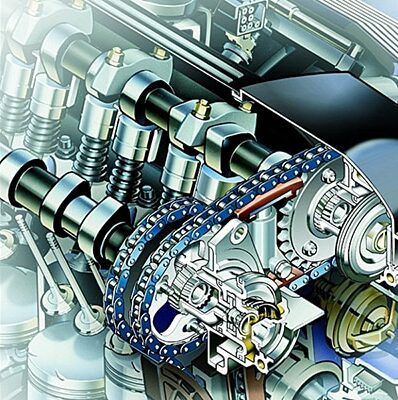
The Variable Valve Timing system relies on clean, pressurized oil to control camshaft position. The ECM sends signals to the oil control valves (OCVs), which direct oil pressure into the camshaft phasers. These phasers adjust the camshaft angle relative to the crankshaft for optimal performance.
When oil is clean and at the proper level, timing changes occur smoothly and precisely. If oil pressure drops from low oil, dirty oil, or a restriction, the phasers can stick in the advanced position. This causes the ECM to record over-advanced timing on one or both banks.
That’s exactly what the P0011 and P0021 codes are telling you.
Low Oil Level and Pressure Problems
A low oil level is one of the most common reasons these codes appear. Even being a quart low can be enough to cause a pressure drop, especially at idle. Without proper oil pressure, the VVT system can’t maintain accurate timing.
The ECM detects that the cam timing isn’t responding properly and flags it as over-advanced. Prolonged oil starvation can also damage the cam phasers, solenoids, and even the timing chain itself.
Old or Dirty Oil Causing Restricted Flow
Overdue oil changes are another leading cause. Old or contaminated oil thickens and breaks down, forming sludge that can clog the tiny oil passages in the VVT system. The solenoids and phasers need free-flowing oil to function.
If oil passages are restricted, the phasers can’t react quickly enough when the ECM commands a timing change. The delay makes the ECM think the camshaft is advanced when it shouldn’t be and triggers the codes.
You might also notice rough idling, hesitation, or poor acceleration — all signs that your VVT isn’t adjusting properly.
Incorrect Oil Viscosity
Using the wrong oil viscosity can cause these problems. Oil that is too thick takes longer to reach the top of the engine, delaying VVT activation, while oil that is too thin cannot hold enough pressure to move the phasers correctly.
For example, using 10W-40 oil in an engine designed for 5W-30 can cause sluggish VVT performance, especially during cold starts. Always use the oil viscosity specified in your owner’s manual.
Other Possible Causes Beyond Oil
- Faulty VVT solenoids (Oil Control Valves) – may stick open or closed.
- A worn timing chain or tensioner can affect the timing of the engine.
- Camshaft phaser failure – stuck in the advanced position.
- Contaminated camshaft position sensors – cause false readings.
- ECM software issue – rare, but possible in some vehicles.
How to Diagnose and Fix the Problem
- Check the oil level and condition—top off or replace immediately if needed.
- Change the oil and filter using the correct viscosity and high-quality parts.
- Clear the codes and drive the vehicle to see if they return.
- Inspect the VVT solenoids for sludge or electrical failure if codes persist.
- Check oil pressure with a gauge to confirm proper operation.
- Listen for timing chain noise — rattling may indicate tensioner wear or stretch.
Ignoring the Problem Can Be Costly
If these warnings are ignored, you risk more than just a check engine light. Low oil pressure and improper cam timing can cause premature engine wear, reduced performance, increased fuel consumption, and even engine failure if unaddressed.
The Bottom Line
If your check engine light and oil warning light come on at the same time, especially with P0011 and P0021 codes, don’t ignore them. These are early signs that your engine’s oil pressure and timing system need attention.
Maintaining clean, full oil at the correct viscosity is the most effective way to prevent these codes, protect your VVT system, and ensure long-term engine performance.

Drew Marks
Buys, sells, reconditions, and restores cars, a passion he has pursued since 2008. He owns Los Angeles Cash for Cars, a trusted car buyer serving the greater Los Angeles area. With years of hands-on experience in used cars, classic car restoration, and automotive valuation, he is passionate about educating the public on how to sell a car for cash or buy a reliable used vehicle with confidence.