
Home » Everything you need to know about brakes on a car
How Do Car Brakes Work and When to Service Them
- Andrew Marks
- Car Wisperer
Understanding How Car Brakes Work
Your car’s braking system is a crucial safety component that converts the vehicle’s kinetic energy into heat through friction. The main components of a disc braking system include brake calipers, brake pads, rotors (discs), and brake hoses. Most modern cars feature disc brakes on all four wheels, while some use drum brakes on the rear axle. Both systems rely on hydraulic pressure to transmit braking force from the pedal to the wheels.
Disc Brakes vs. Drum Brakes
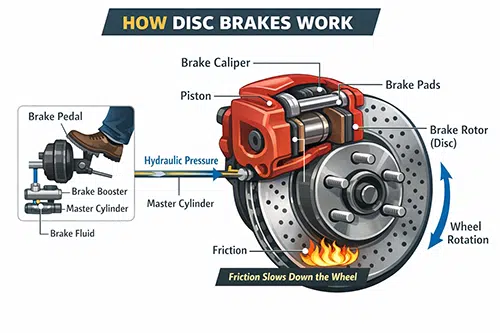
Disc brakes provide more consistent stopping power and better heat dissipation, making them the preferred choice for modern vehicles. In this system, the caliper’s pistons squeeze the brake pads against a metal disc (rotor), slowing wheel rotation through friction. The heat generated is dispersed by the rotor’s surface and the surrounding air.
Drum brakes, on the other hand, feature curved brake shoes that press outward against the inside of a rotating drum. Although they generate more heat and are less efficient under heavy loads, drum brakes are cost-effective and work well on rear wheels where less braking force is needed.
Key differences include:
- Disc Brakes: Provide stronger, more consistent braking; better cooling; often used on front or all four wheels.
- Drum Brakes: Simpler design; lower production cost; suitable for lighter braking demands and parking brake systems.
- Maintenance: Disc brakes are easier to inspect and replace, while drum brakes require disassembly for inspection.
How Hydraulic Brake Systems Work
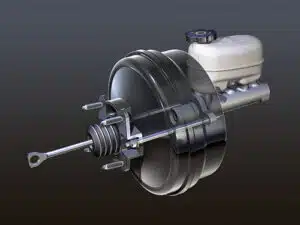
Your car’s brakes work when you press the brake pedal. The power brake booster increases the force and sends it to the master cylinder. The master cylinder turns this force into hydraulic pressure, which moves brake fluid through steel lines and flexible hoses to the calipers or wheel cylinders.
As the pressure increases, the pistons in the calipers push the brake pads against the rotor. This creates friction and slows down the wheels.
The harder you press the pedal, the more hydraulic pressure the system generates, increasing braking force.
In short, the hydraulic brake system involves:
- Brake Pedal and Booster: Multiply foot pressure for easier braking.
- Master Cylinder: Generates and maintains hydraulic pressure.
- Brake Fluid: Transfers pressure through lines to each wheel.
- Calipers or Wheel Cylinders: Apply mechanical force to pads or shoes.
- Rotors or Drums: Convert kinetic energy into heat to slow the vehicle.
Why Brake Maintenance Is Important
Your car’s brakes work each time you press the pedal. Brake fluid moves through the brake lines, applying pressure to the pads or shoes, and creating friction that slowly wears them down. As the pads or shoes wear out, your brakes lose effectiveness, and consequently, your car takes longer to stop. Skipping regular brake service compromises your safety and leads to expensive repairs.
Common results of neglected brake maintenance include:
- Poor Braking Performance: Worn pads and glazed rotors reduce friction and responsiveness.
- Brake Fade: Excessive heat buildup weakens braking power, especially during repeated hard stops.
- Uneven Braking or Pulling: Indicates a stuck caliper or uneven pad wear.
- Rotor or Drum Damage: Metal-on-metal contact can score or warp braking surfaces.
- Brake Fluid Contamination: Moisture lowers fluid efficiency, leading to spongy brakes and corrosion.
Regular inspections help prevent these issues. Mechanics typically recommend a brake inspection every 12,000–15,000 miles, or at least once per year.
When to Service Your Car’s Brakes
- If you hear squealing or grinding, your brake pads may be worn out, or the metal may be touching the rotor.
- A soft or spongy brake pedal can indicate air in the brake lines or low brake fluid.
- If you feel pulsing or vibrations when braking, warped rotors or uneven wear often cause this.
- If your car pulls to one side when braking, a stuck caliper or uneven brake pressure could be causing this.
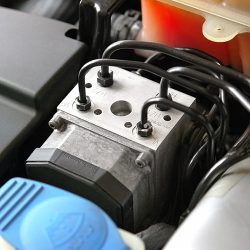
- A brake warning light may show up if the fluid is low, the pads are worn, or there is a problem with the ABS system.
- If you notice a burning smell after braking, your brakes may have overheated, or a stuck caliper could be causing the issue.
Final Thoughts
Your car’s braking system is vital to safety and performance. Understanding how car brakes work and knowing when to service them ensures consistent stopping power and peace of mind. Routine inspections and timely repairs not only improve safety but also extend the life of your rotors, pads, and hydraulic components.
Types Of Brakes:
Disc Brakes
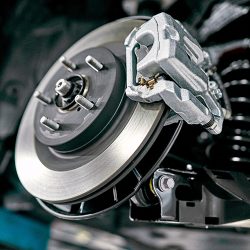
Hydraulic disc brakes attach to your car’s wheels. They include a brake rotor, brake caliper, and brake pads. When you push down the brake pedal, the brake master cylinder forces hydraulic fluid into the brake lines. The fluid flows directly to the pistons in the brake caliper. In turn, the brake pads press against the rotating brake rotor. This contact creates friction, slowing the vehicle or bringing it to a complete stop.
Drum Brakes
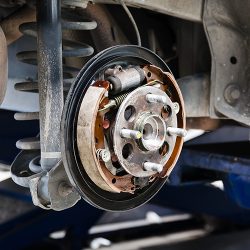
Drum brakes work with hydraulic brake fluid. When you press the brake pedal, the fluid moves through the brake lines, creating pressure. This pressure pushes two pistons out of the brake cylinder inside the drum. The pistons then move the brake shoes outward, so the high-friction lining presses against the inside of the spinning drum. Since the drum is connected to the wheel, this friction slows down or stops the car. Today, drum brakes are mostly found on the rear wheels of modern cars.
ABS Brakes
Park Brake
Disclaimer: This article is intended for general informational purposes only. Automotive maintenance, repair, upgrades, and installations can vary depending on the specific make and model of your vehicle. Always refer to your owner’s manual or a reputable repair guide for instructions specific to your car, and consider seeking assistance from a licensed automotive professional—especially for advanced diagnostics or repairs.

Drew Marks
Buys, sells, reconditions, and restores cars, a passion he has pursued since 2008. He owns Los Angeles Cash for Cars, a trusted car buyer serving the greater Los Angeles area. With years of hands-on experience in used cars, classic car restoration, and automotive valuation, he is passionate about educating the public on how to sell a car for cash or buy a reliable used vehicle with confidence.