
Home » What Are Oxygen Sensors and How They Trigger a Cars Check Engine Light?
Oxygen Sensors and Your Cars Check Engine Light
- Andrew Marks
- February 14, 2026
- 3 minutes read
Making Sense of a Cars Exhaust Emissions System
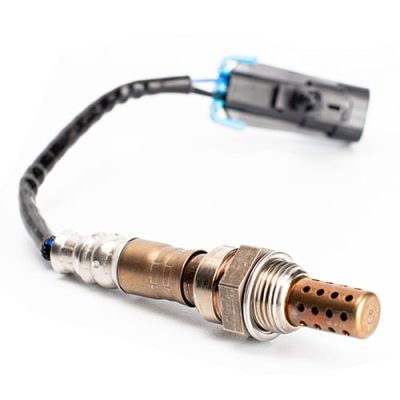
Oxygen sensors, or O2 sensors, monitor oxygen levels in your car’s exhaust system. Then, they send this information to your car’s computer, the engine control unit (ECU). In response, the ECU adjusts the air-fuel ratio to help your engine run efficiently and reduce emissions. However, when an oxygen sensor fails, it often triggers the check engine light and alerts you that something in the emissions system needs attention.
Most vehicles have two to four oxygen sensors. The upstream O2 sensors are located in the exhaust manifold or pipe upstream of the catalytic converter and monitor the air-fuel mixture exiting the engine. Some cars call the upstream sensor the Air-Fuel Ratio Sensor. Meanwhile, the downstream O2 sensors are located in the exhaust pipe after the catalytic converter and monitor how well the catalytic converter reduces harmful emissions.
How Oxygen Sensors Trigger the Check Engine Light
When an oxygen sensor begins to fail, it sends incorrect readings to the ECU. These incorrect readings disrupt the air-fuel mixture, triggering the check engine light. A faulty sensor causes the engine to run too rich (with too much fuel) or too lean (with too much air). As a result, the engine idles roughly, stalls, accelerates poorly, and suffers from poor fuel economy. Faulty oxygen sensors commonly trigger catalytic converter efficiency codes:
- P0420 – Catalyst System Efficiency Below Threshold (Bank 1)
- P0430 – Catalyst System Efficiency Below Threshold (Bank 2)
These codes appear when the downstream oxygen sensor detects that the catalytic converter is not cleaning the exhaust efficiently. However, in many cases, the catalytic converter itself is not the root problem. Often, it is the oxygen sensors.
How Oxygen Sensors Cause P0420 & P0430 Codes
- False readings: A worn-out downstream O2 sensor can make the catalytic converter appear to be failing, even when it’s fine.
- Delayed response: If an upstream sensor is slow or inaccurate, it may cause the engine to run with the wrong fuel mixture. This will put stress on the catalytic converter and trigger codes.
- Fuel mixture problems: A faulty upstream sensor may cause unburned fuel to enter the exhaust. Over time, this damages the catalytic converter and eventually causes both P0420 and P0430 codes.
Symptoms of Bad Oxygen Sensors and Catalyst Codes
- Check Engine Light Stays On: A failing oxygen sensor often causes the check engine light to stay on. Even if the car runs normally, ignoring it can lead to engine or emissions problems.
- Reduced Fuel Efficiency: Bad O2 sensors send inaccurate data, causing the engine to burn too much or too little fuel—leading to poor gas mileage and higher fuel costs.
- Poor Acceleration or Stalling: Faulty readings can upset the air-fuel balance, resulting in rough idling, hesitation, or stalling during acceleration.
- Rotten Egg Smell from Exhaust: A sulfur or rotten-egg odor indicates unburned fuel entering the catalytic converter, often due to a faulty oxygen sensor.
- Failed Emissions Test: A malfunctioning O2 sensor increases harmful exhaust emissions, causing your vehicle to fail a smog or emissions test.
Final Thoughts
If your check engine light comes on and you see one of these codes, use an OBD-II scanner to find out which oxygen sensor might be the problem. Most auto parts stores will do this for free. Before replacing anything, check the sensor’s wiring and connections. Make sure they aren’t loose or damaged. Many sensors are easy and affordable to replace. If the light stays on after the replacement, or if the code points to the catalytic converter, schedule an appointment with a trusted mechanic for further diagnosis. Taking these steps can help you avoid bigger repairs and keep your car running smoothly.

Drew Marks
Buys, sells, reconditions, and restores cars, a passion he has pursued since 2008. He owns Los Angeles Cash for Cars, a trusted car buyer serving the greater Los Angeles area. With years of hands-on experience in used cars, classic car restoration, and automotive valuation, he is passionate about educating the public on how to sell a car for cash or buy a reliable used vehicle with confidence.